
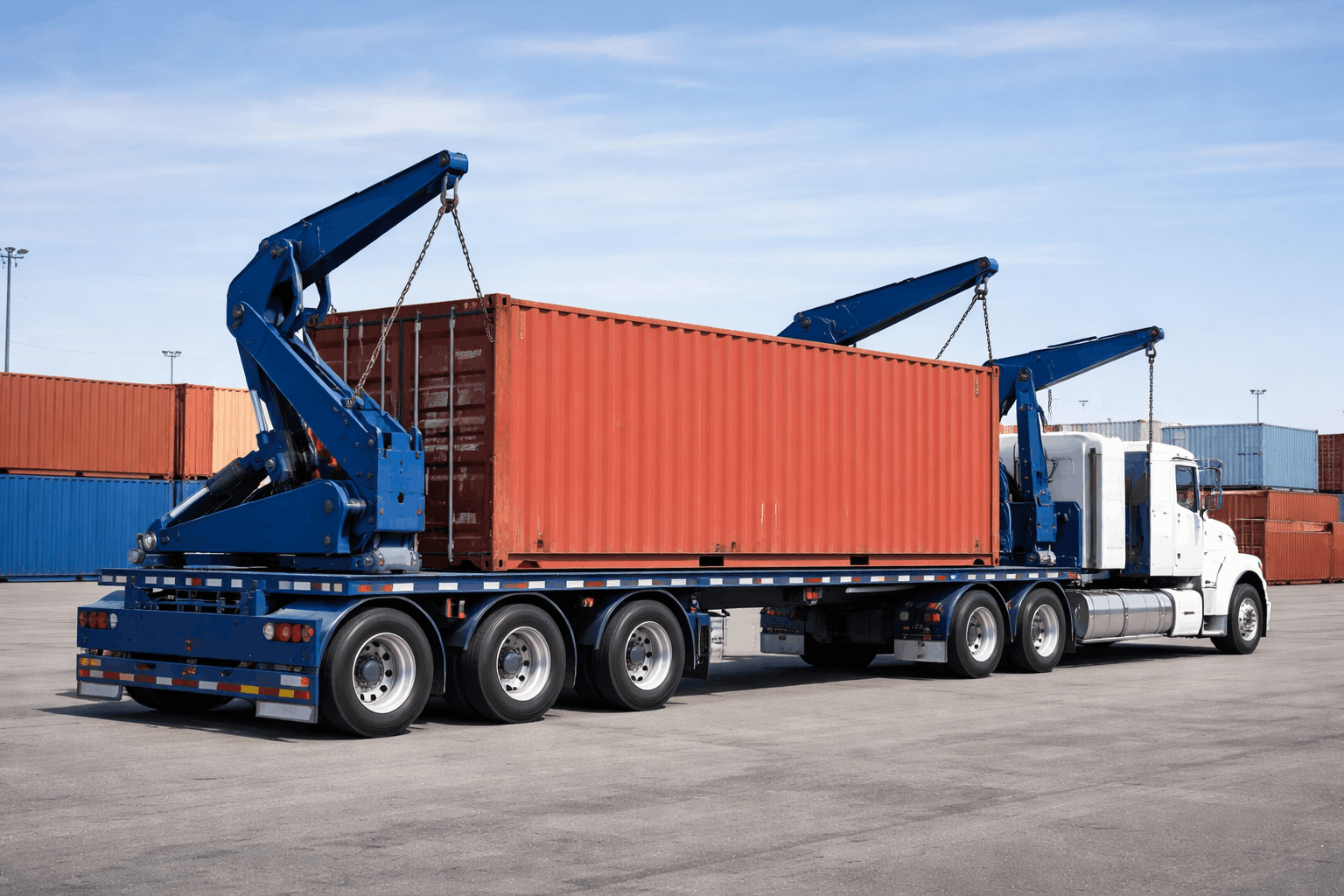
What Makes Side Loader Transport Essential For Modern Container Handling?
Efficient container handling is critical in industries that rely on precise logistics and limited access sites. Side loader transport has become a preferred solution because it allows containers to be loaded and unloaded from the side rather than the rear. This makes it especially useful in urban areas, construction zones, and sites with restricted space where traditional methods are impractical.
Side loader transport offers a controlled and adaptable approach to container movement, ensuring both safety and operational efficiency without compromising accessibility.
How does side loader transport work in practice?
Side loaders are specially designed vehicles fitted with hydraulic lifting arms that raise and lower containers from ground level. This system allows a single vehicle to manage the entire transport process without additional lifting equipment. The result is smoother handling and greater control throughout the operation.
- Hydraulic arms lift containers directly from the ground or another vehicle
- The container remains level during lifting to protect structural integrity
- Operations can be completed without cranes or forklifts
- Suitable for both loading and unloading at tight or uneven sites
Why is side loader transport ideal for restricted access locations?
Many sites do not offer the clearance or turning space required for conventional container handling methods. Side loaders overcome this limitation by operating laterally, making them highly adaptable to challenging environments. This flexibility is particularly valuable in residential, commercial, and infrastructure settings.
- Requires minimal overhead clearance compared to cranes
- Operates efficiently in narrow streets and confined yards
- Reduces disruption to surrounding areas
- Allows precise placement close to boundaries or structures
What types of projects benefit most from side loader transport?
Side loader transport is widely used across multiple sectors due to its versatility. From construction sites to industrial storage, it supports projects where timing, safety, and placement accuracy are essential. Its ability to operate independently makes it suitable for both short-term and long-term applications.
- Construction sites requiring staged container placement
- Infrastructure projects with limited site access
- Industrial operations needing regular container relocation
- Temporary storage solutions in urban environments
How does side loader transport improve safety and efficiency?
Safety is a major concern when handling heavy containers, and side loaders are engineered to minimise risk. The controlled lifting mechanism reduces manual handling and limits the need for additional machinery. This streamlined process leads to fewer hazards and more predictable outcomes.
- Reduces reliance on multiple pieces of lifting equipment
- Minimises manual intervention during container movement
- Provides stable, balanced lifting on uneven ground
- Lowers the risk of site congestion and accidents
What should be considered when planning side loader transport?
Successful container transport depends on careful planning and site assessment. While side loaders are highly adaptable, understanding ground conditions, access points, and container specifications ensures smooth execution. Proper preparation allows the equipment to be used to its full potential.
- Ground stability and load-bearing capacity
- Clear access for lateral loading and unloading
- Container size, weight, and condition
- Proximity to buildings, fences, or other obstacles
How does side loader transport support project timelines?
Time efficiency is a key advantage of side loader operations. Because the vehicle can load, transport, and unload independently, delays caused by equipment coordination are reduced. This reliability helps projects stay on schedule, even in complex environments.
- Faster setup compared to crane-based operations
- Reduced waiting time for external lifting equipment
- Consistent handling process across multiple deliveries
- Improved predictability for logistics planning
Why is side loader transport a reliable long-term solution?
As sites become more constrained and project demands increase, adaptable transport methods are increasingly valuable. Side loaders provide a scalable solution that meets evolving logistical needs without compromising safety or efficiency. Their continued use reflects their practicality across a wide range of applications.
- Adaptable to changing site conditions
- Suitable for repeat or long-term use
- Supports sustainable site management practices
- Proven reliability across varied industries
Conclusion
Side loader transport plays a vital role in modern container logistics by offering a safe, efficient, and flexible handling solution. Its ability to operate in restricted spaces while maintaining precise control makes it invaluable across construction, industrial, and infrastructure projects. With careful planning and site assessment, side loader transport supports smoother operations and improved project outcomes. As access challenges continue to grow, side loader transport remains a dependable choice for efficient container movement.