
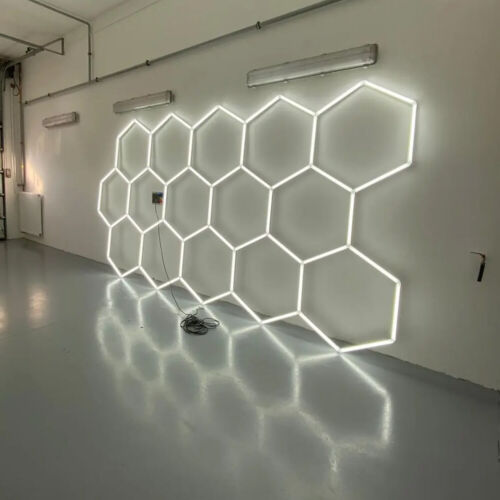
Why Are People Rethinking The Way Light Shapes A Space?
Lighting is no longer treated as a background element that simply fills a room with brightness. It has become part of how a space communicates purpose and personality. This shift explains the growing interest in hexagon led lighting, a design-forward option that changes how ceilings and walls are perceived. Unlike conventional fittings, hexagon led lighting creates structure and rhythm, helping spaces feel more intentional rather than purely functional.
When Did Lighting Start Becoming a Design Feature?
The moment interiors moved towards cleaner lines and open layouts, lighting began carrying more visual responsibility. Flat, uninspired fixtures often disappear into the ceiling, while geometric layouts command attention. Hexagonal patterns naturally feel balanced and modern, making them suitable for spaces where aesthetics matter just as much as illumination. This transition reflects a broader trend where lighting is chosen with the same care as flooring or wall finishes.
How Does Patterned Lighting Influence Spatial Awareness?
Light placement affects how large or organised a space feels. Structured patterns guide the eye, creating zones and boundaries without physical partitions. This is particularly useful in garages, studios, gyms, and workshops where multiple activities occur in one area. The visual repetition of hexagonal layouts brings order, making large or utilitarian spaces feel considered rather than cluttered.
Can Lighting Impact Focus and Productivity?
Lighting quality directly influences concentration and comfort. Uneven brightness causes eye strain, while poorly positioned fixtures create distracting shadows. This is where hexagon led lighting becomes a practical solution in the middle of modern lighting discussions. Its interconnected design spreads light evenly, supporting tasks that require clarity and precision. Whether detailing a vehicle or working on creative projects, consistent illumination encourages better performance.
Why Is Customisation Becoming a Priority?
One-size-fits-all lighting rarely suits modern spaces. Ceiling height, room size, and intended use vary widely, making flexibility essential. Modular lighting systems allow layouts to be adapted without redesigning the entire setup. Hexagonal designs can be expanded, reduced, or reshaped to suit changing needs, offering long-term versatility rather than a fixed arrangement that may become limiting over time.
Does Energy Efficiency Still Matter in Visual Lighting?
While visual appeal attracts attention, efficiency underpins long-term value. LED technology delivers high output with reduced energy consumption, aligning with Australian expectations around sustainability and cost awareness. Efficient lighting supports extended usage without unnecessary power drain, which is particularly important in spaces that operate for long hours.
What Role Does Lighting Play in First Impressions?
Before furniture or finishes are noticed, lighting sets the tone. A bold ceiling design immediately signals modern thinking and attention to detail. Structured lighting layouts suggest professionalism, creativity, and innovation. In commercial or semi-public spaces, this visual message helps establish credibility without relying on excessive decoration.
Are These Lighting Styles Limited to Trend-Focused Spaces?
While often associated with modern or industrial interiors, hexagonal lighting is adaptable. Minimalist homes, contemporary garages, and creative studios all benefit from clean geometric forms. The appeal lies in balance—strong visual identity without overwhelming the space.
Is the Future of Lighting More Structured Than Ever?
As interiors continue to evolve, lighting is expected to deliver more than illumination. Structure, adaptability, and efficiency are shaping future expectations. Hexagon led lighting aligns with this direction by combining form and function in a way traditional fixtures cannot. It reflects a future where lighting is both a practical tool and a defining design element.
