
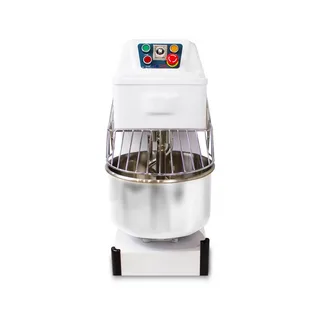
Spiral Mixers and Their Real Performance in Daily Dough Mixing
Why Spiral Mixers Are Supposed to Make Mixing Easier
I’ve been dealing with spiral mixers for a while now and honestly, I don’t even know if they’re helping me or stressing me out more. Everyone online acts like spiral mixers are some magical solution for perfect dough, but when I actually use one, it’s a whole different reality. Sometimes it mixes too fast, sometimes too slow, sometimes it feels like it’s pulling the dough weirdly, and then I’m standing there wondering why I even bothered buying this giant machine in the first place.
The Problems I Keep Facing With Spiral Mixers
The dough sometimes wraps around the hook in a way that annoys me so much I want to switch the machine off halfway. And the bowl rotation — don’t even get me started. Sometimes it rotates nicely, and sometimes it behaves like it’s tired of me. I try to adjust the hydration, I try to change the speed, but then I still end up staring at dough that looks like it didn’t even mix properly. I’ve had batches where the top part mixed great and the bottom part didn’t mix at all, and then I’m stuck thinking whether the mixer hates me or I just did something wrong again.
How the Mixing Speed Keeps Confusing Me
I know spiral mixers usually come with two speeds, but why does speed one feel like it’s doing nothing and speed two feels like the dough is about to fly out of the bowl? I’m always catching myself switching between the two like a confused person who can’t make a decision. I don’t understand why something that looks so simple ends up making me think so much while I’m literally just trying to mix dough.
Material and Build Quality That I Keep Questioning
People act like a heavy spiral mixer automatically means good quality, but I’ve used heavy ones that shake like crazy and lighter ones that sound like they’re dying. I keep checking the motor noise, the bowl friction, the hook rotation, and honestly, I never expected to be this invested in mixer engineering. I just want something stable that doesn’t make me panic every time it starts spinning faster.
My Own R&D While Using Spiral Mixers
I’ve been testing dough batches like I’m doing some lab experiment. Different hydration, different flour, different rest times — all so I can understand how the mixer behaves. And still, some days it mixes perfectly, and other days it just decides to embarrass me. I keep trying to figure out whether it’s the mixer’s mechanism or just me overthinking everything again. But I don’t trust any product description until I actually test the mixer myself because half of them promise “flawless dough” and I’ve never seen that happen without a fight.
Choosing a Spiral Mixer Without Regretting It
Now I look at everything — motor wattage, bowl capacity, belt system, noise level, even how stable the base looks. I’ve learned the hard way that a bad mixer can ruin dough before I even start shaping it. I don’t want to spend time fixing problems caused by my equipment. I want something that mixes evenly, consistently, and doesn’t make me talk to myself while baking.
Final Thoughts on Using Spiral Mixers Every Day
I still keep using spiral mixers because they do make things easier when they actually work the way they’re supposed to. But I’m still in that stage where I’m constantly adjusting, testing, ranting, and researching. I want a mixer that behaves predictably so I don’t stress every time the dough starts climbing the hook or rotating weirdly. And until I find that perfect spiral mixer that matches how I bake, I’ll probably keep complaining and experimenting like some obsessed baker stuck in a loop.